• Skip to primary navigation
  • Skip to main content

Bienz Group

  • Welcome
  • Research
    • Silencers limiting HOX gene expression in the Drosophila embryo
    • Inductive signalling in the Drosophila embryonic midgut
    • Signal integration by TCF factors binding to HOX midgut enhancers
    • The Wnt enhanceosome
    • Dual functions of the APC tumour suppressor
    • Wnt signalosome assembly by dynamic head-to-tail polymerisation of Dishevelled 
    • Head-to-tail polymerisation in plants
  • The Group
    • Gallery
    • Alumni
  • Outreach and mentoring
  • Acknowledgements

Inductive signalling in the Drosophila embryonic midgut

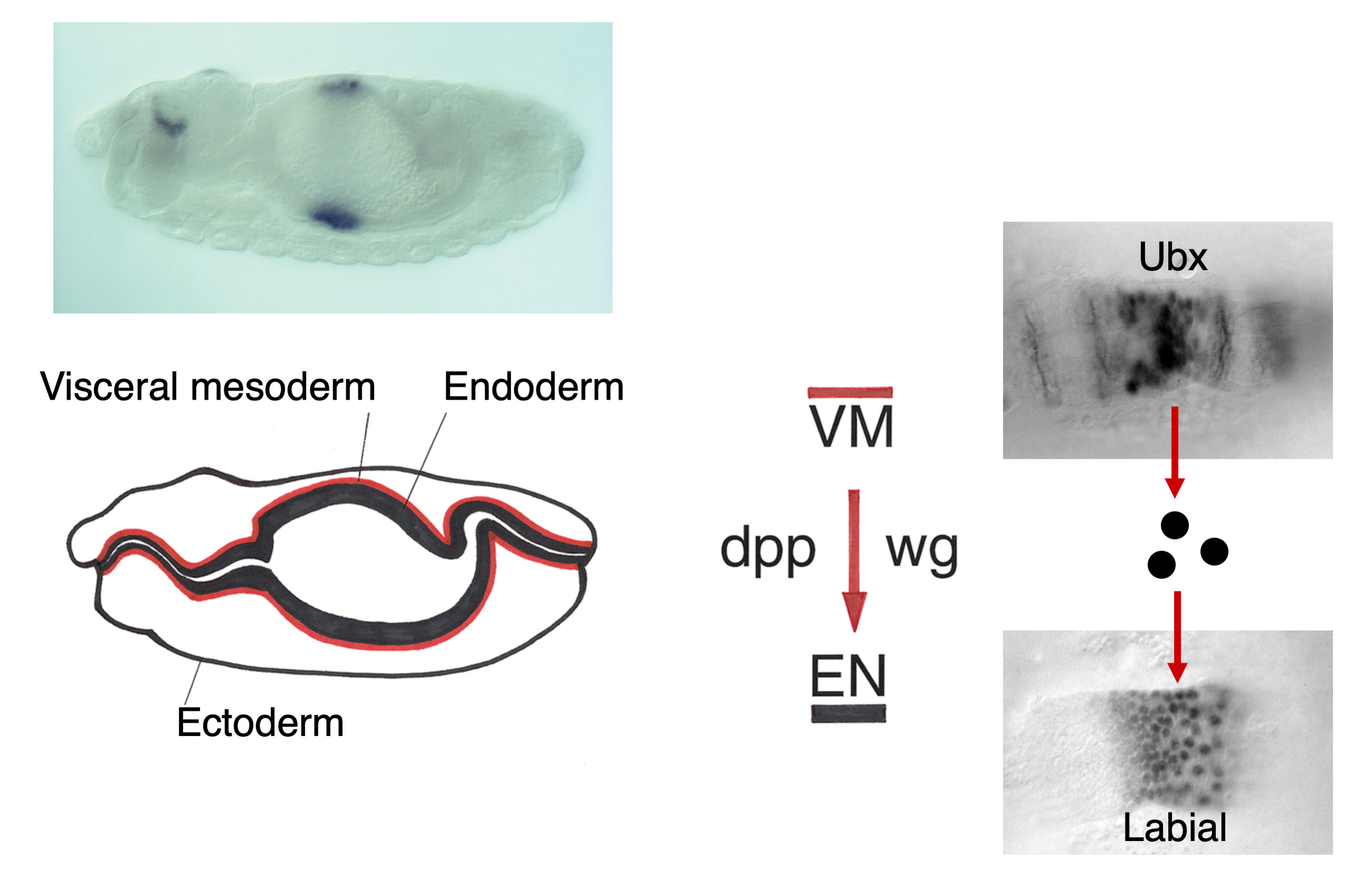
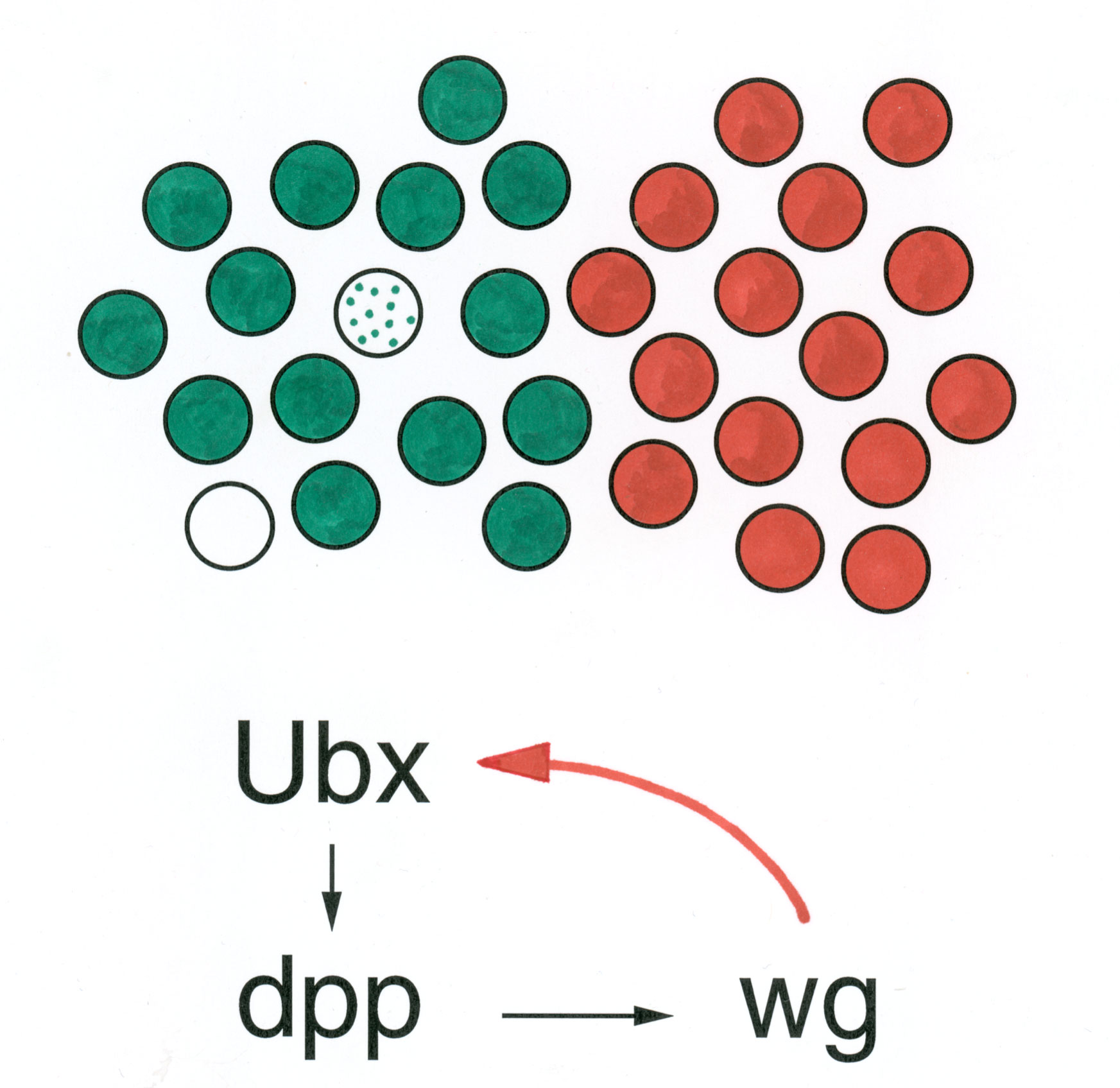
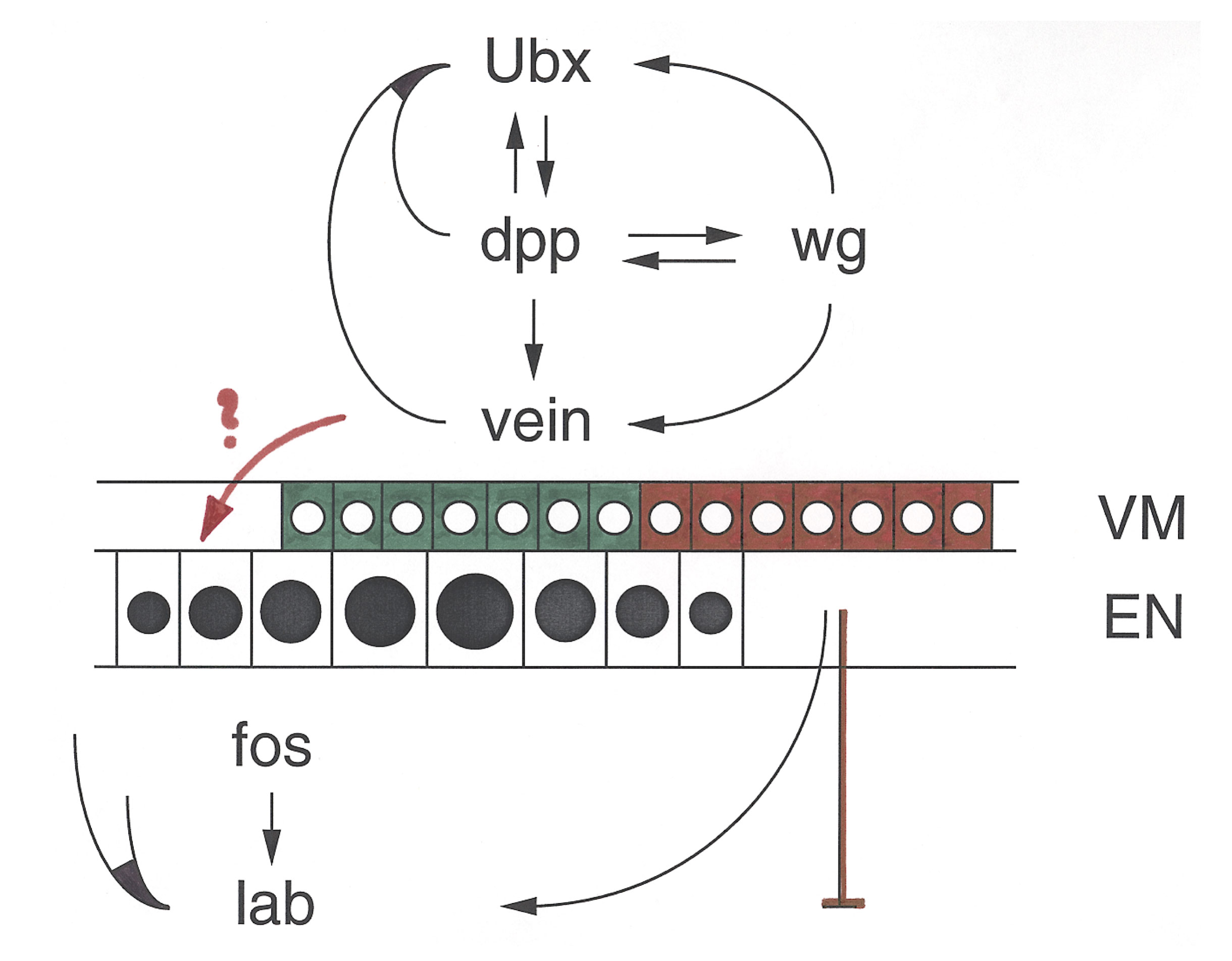
Early on, we discovered a discrete midgut-specific enhancer upstream of the Ultrabithorax promoter whose control was distinct from that of the epidermis-specific enhancers and silencers. This enhancer mediates position-specific activation of Ultrabithorax in a single segment-wide stripe in an internal mesodermal layer of the embryo – the visceral mesoderm that envelops the embryonic midgut. Its minimal ~240bp core element turned out to be responsive to positional signalling from adjacent cells secreting Wingless/Wnt, Dpp/TGFbeta and Vein/Neuregulin (whereby the first term denotes the fly founder protein, followed by its mammalian ortholog; here and below). We thus discovered how the HOX gene Ultrabithorax maintains itself in the visceral mesoderm via an indirect autoregulatory loop through autocrine Dpp and Vein signalling and paracrine Wingless signalling from neighbouring cell groups. This ensures coordinate maintenance of Ultrabithorax expression in all cells that make up the segmental stripe surrounding the midgut. Positional inputs from these signals synergise at, and are integrated by, the Ultrabithorax midgut enhancer. 

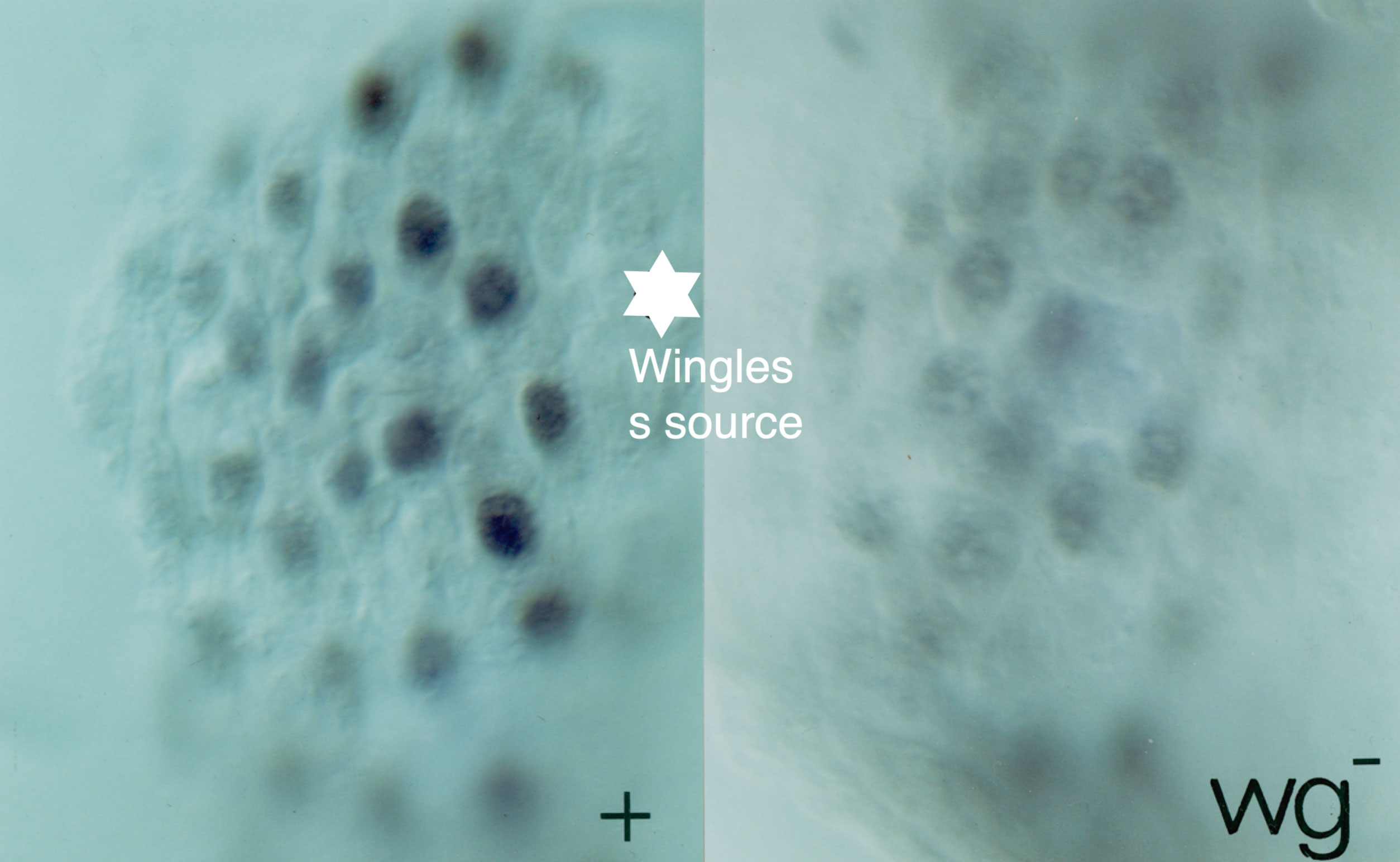
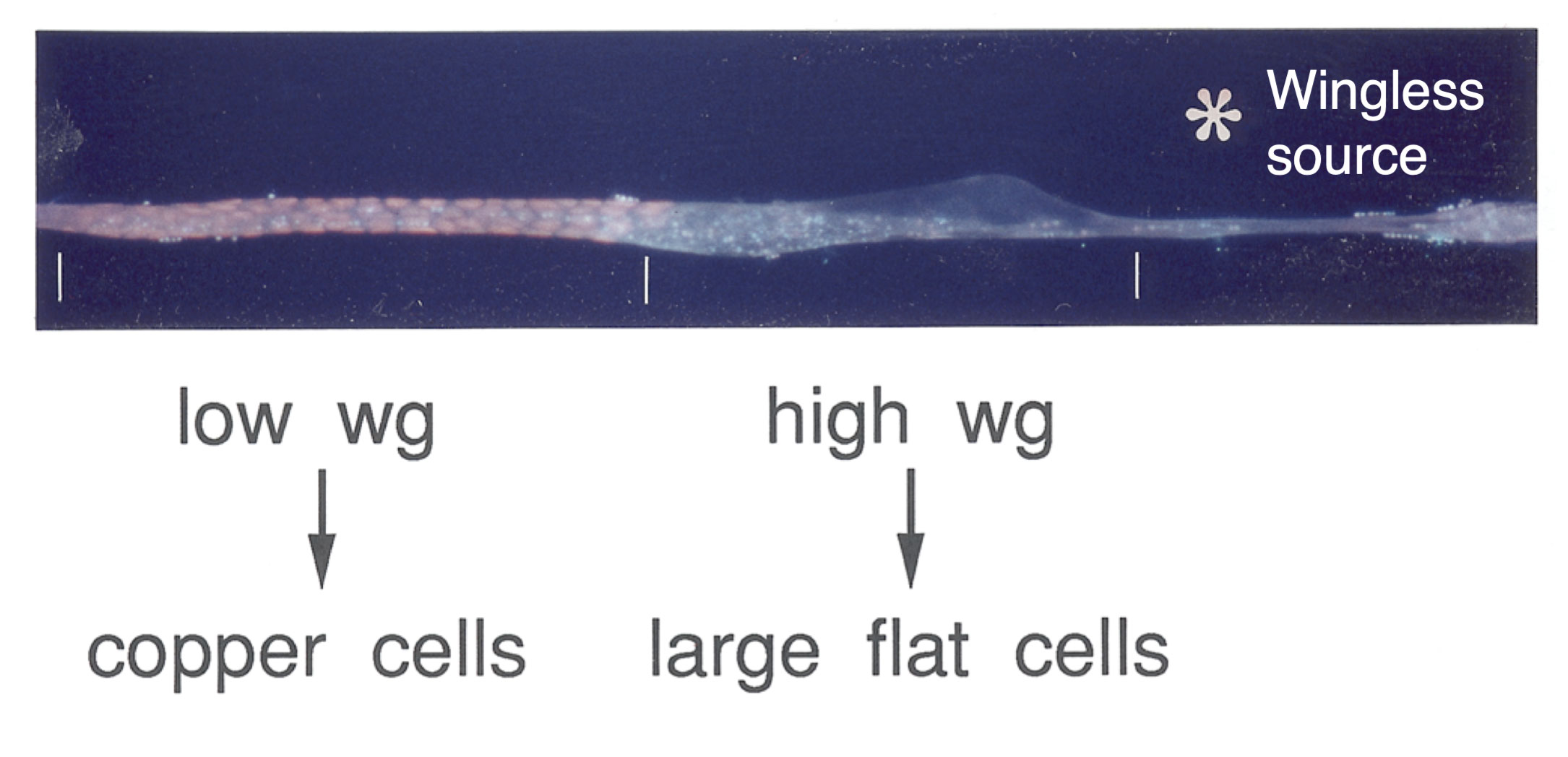
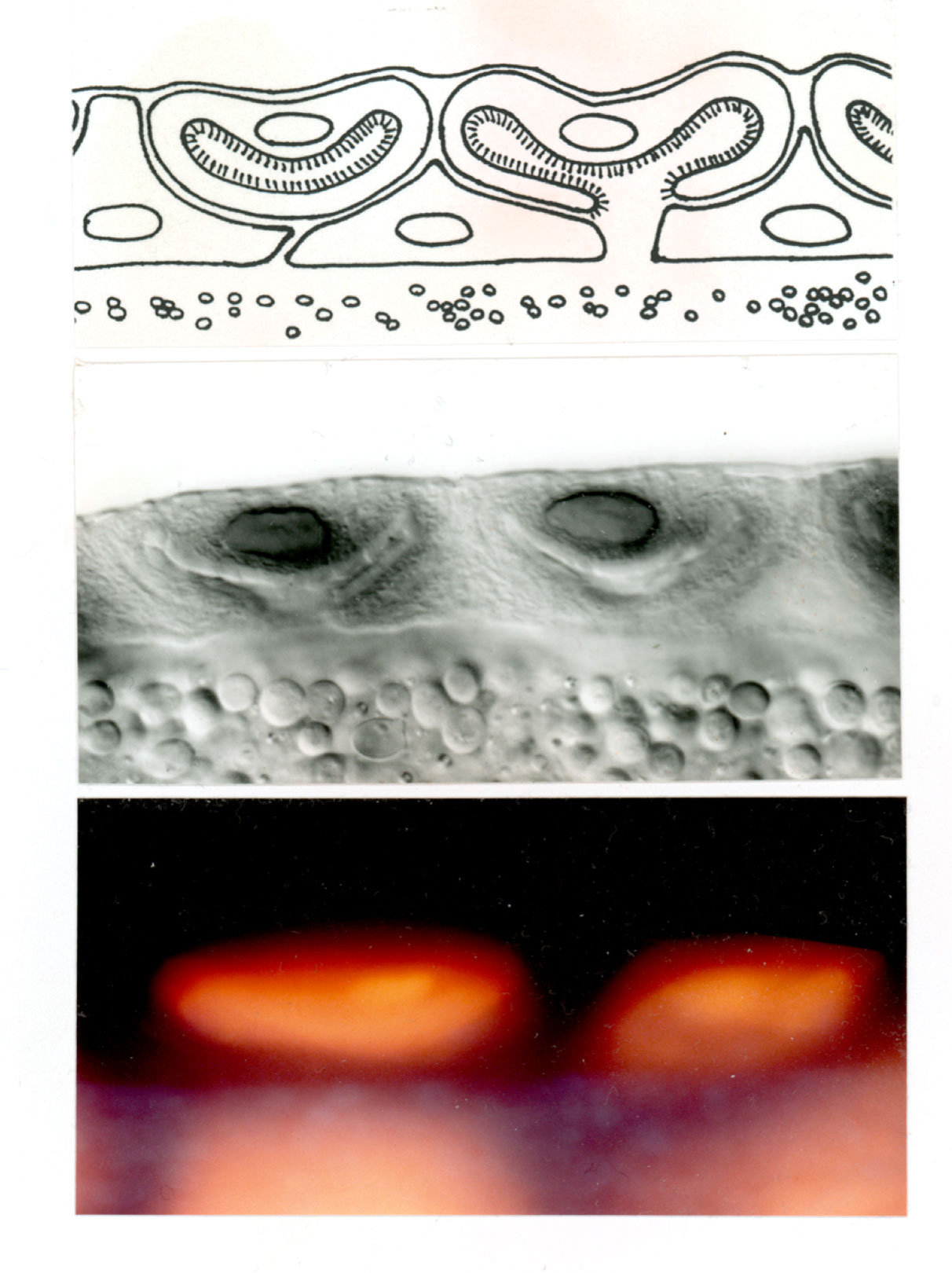
The same three signals cross over to the underlying endodermal cell layer, to specify a single stripe of Labial expression opposite the Ultrabithorax stripe though an intermediate endodermal target gene Dfos (Drosophilac-Fos). As in the case of Ultrabithorax, their inputs are integrated by a compact enhancer upstream of labial. Notably, Wingless signalling determines a gradient of Labial expression throughout the stripe, whereby the highest Labial levels are nearest to the Wingless signalling source. Subsequently, Labial specifies the differentiation of the so-called copper cells (a specialised cell type in the larval ‘stomach’) whereby the levels of Labial in these cells directly determines their size. These acid-secreting cells are required for larval growth, moulting and puparium formation. Through our work, the embryonic midgut became known as a paradigm for inductive signalling across two germ layers. 
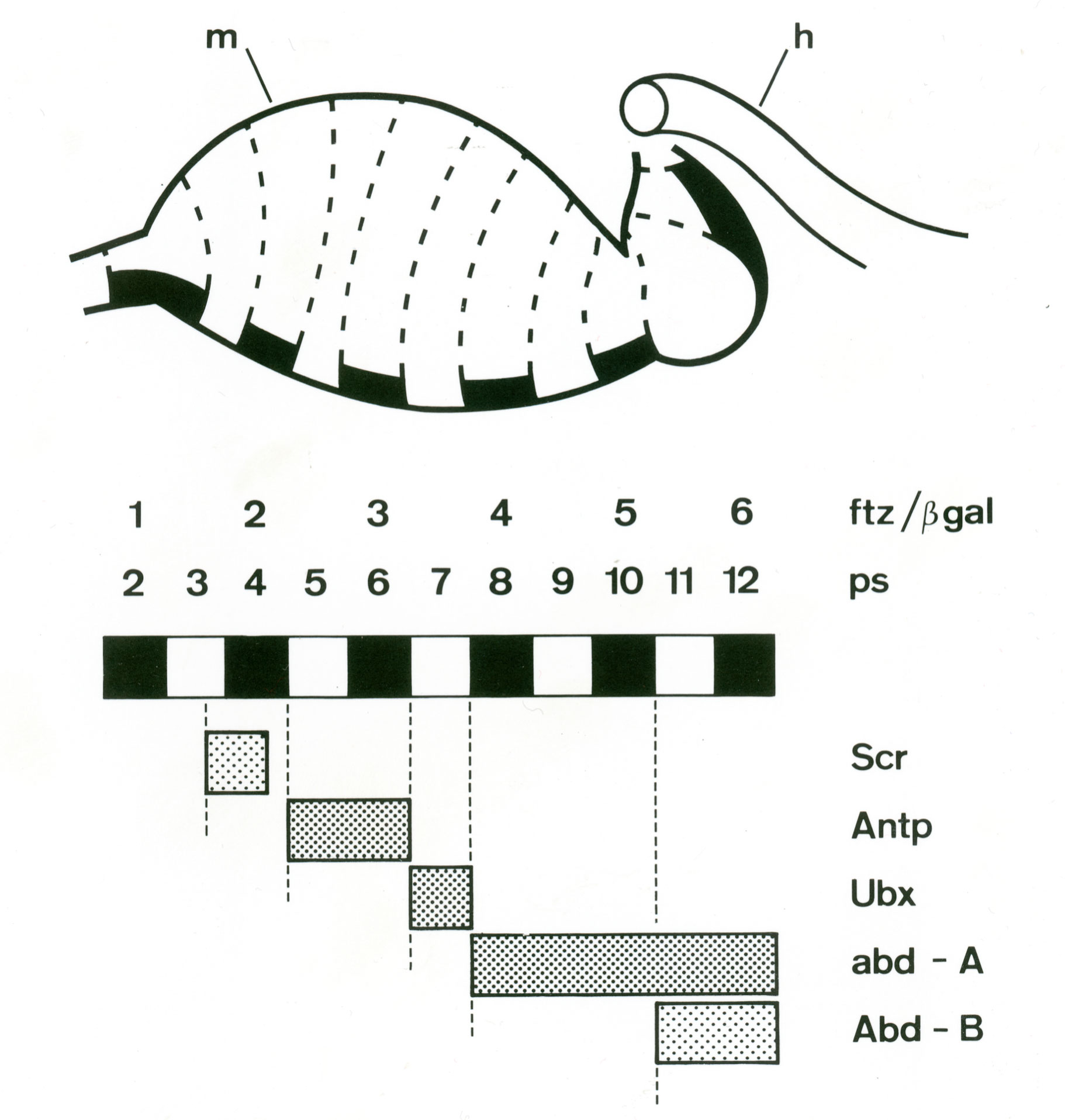
HOX gene expression in the visceral mesoderm of the embryonic midgut
Patterning of the midgut epithelium by signals from the visceral mesoderm
A parautocrine positive feedback loop ensuring coordinate expression of Ubx
An inductive cascade from Ubx to Labial mediated by multiple signals
A Wingless-dependent gradient of Labial expression in the midgut epithelium
Cell type specification in the larval gut depends on Wingless thresholds levels
Copper cells are specified by Labial expression in the midgut epithelium
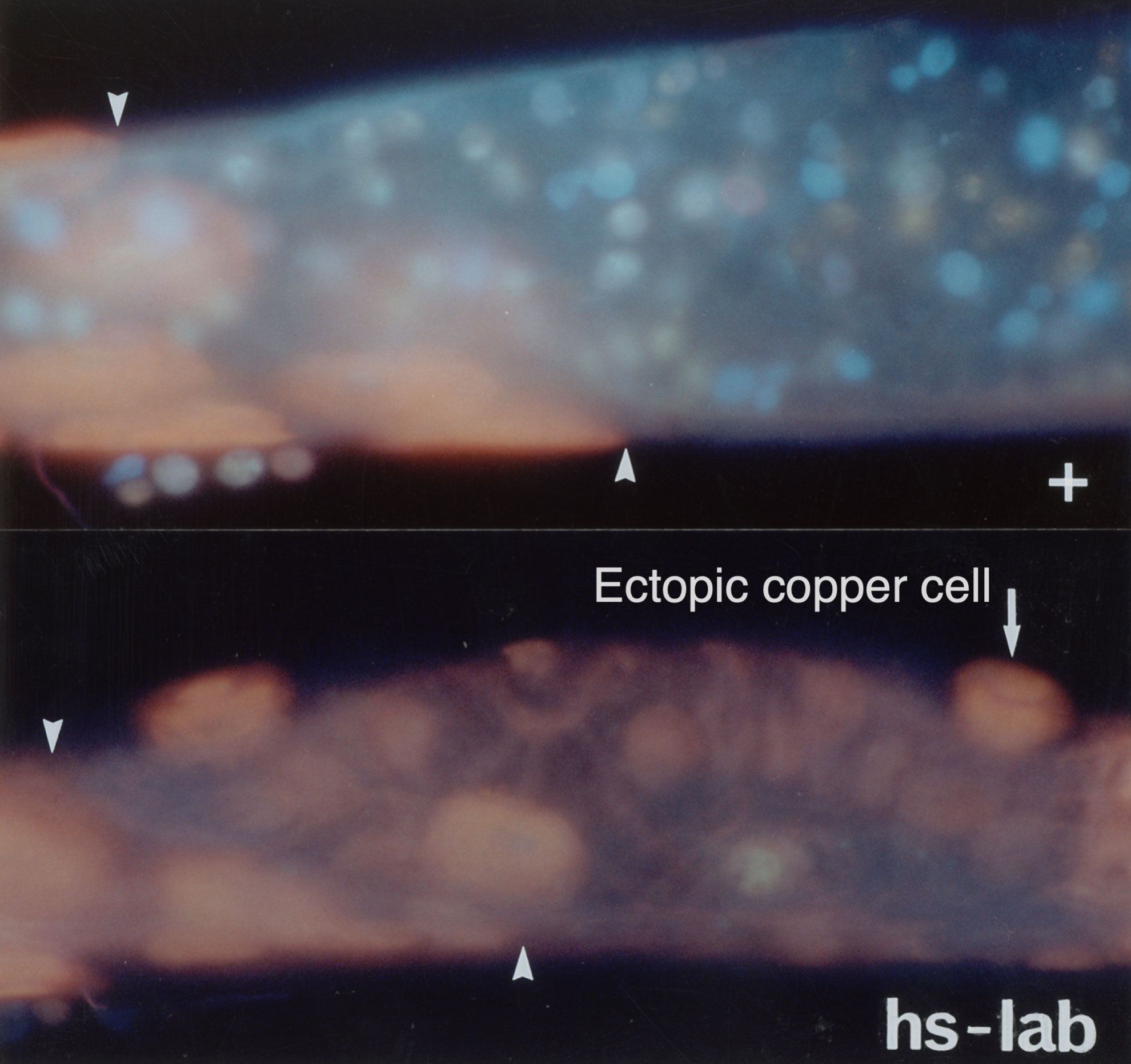
Ubiquitous Wingless in the embryonic midgut specifies ectopic copper cells
Relevant references:
{"pubid":"2897631,2573526,2573527,1973634,8097881,7908470,7907275,7588630,7600572,8631263,9310330,9649506,9835654,11044608","showAllPapers":true,"showAllAuthors":true,"pubmedOrOrcid":"pubmed","pubmedApiKey":"a06f23aba62c0b6ba4feaeb0317dde9a7509","transientExpireTime":86400,"pageBlockId":"ce142be8-4701-4aae-b0f8-a5199d5019f1","showYearWhere":"yearafter","enablePagination":false,"authorFormat":"abbreviated","sortOrder":"oldest"}
  • Bienz, M. (1996)
    Induction of the endoderm in Drosophila.
    Seminars Cell Develop Biol 7113-119
LMB Logo
© 2026 · Bienz Group at the MRC Laboratory of Molecular Biology
Francis Crick Avenue, Cambridge Biomedical Campus, Cambridge CB2 0QH, UK. 01223 267000