• Skip to primary navigation
  • Skip to main content
  • Skip to primary sidebar
MRC Laboratory of Molecular Biology

MRC Laboratory of Molecular Biology

One of the world's leading research institutes, our scientists are working to advance understanding of biological processes at the molecular level - providing the knowledge needed to solve key problems in human health.

  • Home
  • About LMB
  • Research
  • Research Groups
  • Students
  • Recruitment
  • Life at the LMB
  • Achievements
  • News & Events
Home > News & Events > Insight on Research

Insight on Research

  • All
  • 2026
  • 2025
  • 2024
  • 2023
  • 2022
  • 2021
  • 2020
  • 2019
  • 2018
  • 2017
  • 2016
  • 2015
  • 2014
  • 2013
  • 2012
  • 2011
  • 2010

Fast, simple, accessible and affordable: The future of cryo-EM

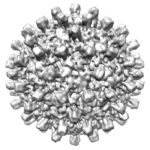
A 3D reconstruction of hepatitis B virus capsid at 100 keV

Is it possible to improve imaging of purified biological specimens in electron cryo-microscopy (cryo-EM) while also reducing its cost? The latest proof-of-principle paper from Chris Russo’s group says yes, and indicates that the answer lies in reducing the electron energy in the cryo-EM from the current standard of 300 or 200 kiloelectron volts (keV) to 100 keV.
More…

Published on 11th October, 2019

Structural insights into control of cell growth by nutrient availability

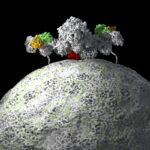
mTORC1 recruited to a lysosome by Rag GTPases in order to be activated by RHEB

Control of cell division is crucially important, as unregulated cell division is a hallmark of cancer. mTORC1 protein kinase is an ancient enzyme complex and master regulator of growth and metabolism that integrates signals relating to nutrient availability, energy, and growth factors. Activation of mTORC1 is driven by proteins called Rags that sense nutrient abundance.

More…

Published on 11th October, 2019

How chromosomes are bound to be separated in cell division

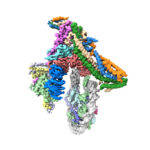
Cryo-EM structure of the inner kinetochore-Cenp-A nucleosome complex

When our cells divide, it is important that the pairs of chromosomes are correctly segregated, as errors in this process cause serious problems. For over a century, kinetochores have been recognised as the critical cellular structures responsible for attaching the chromosomes to the microtubules that direct this chromosomal segregation. However, how exactly kinetochores recognise the centromere, the central point that links the two halves of a chromosome, has been a long-standing question.

More…

Published on 3rd October, 2019

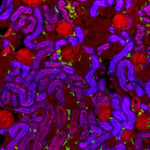
Mapping the human kidney

Chronic kidney disease affects more than 500 million patients worldwide, but there are no specific treatments that prevent disease progression. A lack of tissue availability has limited research into human kidney function and animal research hasn’t translated into treatments for human patients.

More…

Published on 27th September, 2019

How the brain orchestrates head movement

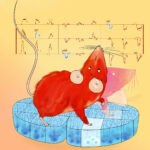
Mouse playing motor notes on collicular piano

While reaching for our morning cup of coffee, we experience the movement of our arm as continuous and smooth. It is natural then to think that the representation of these movements in our brain would also be continuous and smooth. Studying how such target-oriented movements are controlled, Marco Tripodi’s group in the LMB’s Neurobiology Division reveal for the first time that the representation of these actions in the brain is instead granular and discontinuous.

More…

Published on 2nd September, 2019

New cell death pathway in tuberculosis indicates potential use of commonly used drugs

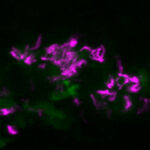
Ruptured infected macrophages (in green) and mycobacteria (in magenta) growing extracellularly

Macrophages are a critical part of our immune system. They patrol our tissues, and when they encounter debris or invaders such as bacteria and parasites, they engulf the particles and destroy them. But if, in the course of tuberculosis, these infected macrophages die through a process called necrosis, in which the cells burst open, then the engulfed bacteria are released back into the extracellular environment where they can grow unrestricted.

More…

Published on 30th August, 2019
  • «
  • ‹
  • 26
  • 27
  • 28
  • 29
  • 30
  • ›
  • »

Primary Sidebar

News & Events

  • Insight on Research
  • LMB News
  • LMB In The News
  • LMB Alumni News
  • Public Engagement
    • Supporting Education
      • I’m a scientist, get me out of here!
      • London International Youth Science Forum
    • LMB on the Road
      • Cambridge Festival
      • Royal Society Summer Science Exhibitions
      • Big Biology Day
      • LifeLab
    • Events at the LMB
      • Artists in Residence: Home in the Service of Science
      • LMB Open Day 2017
      • STEM in Song
    • Resources
      • Image Game
    • LMB Science Stories
      • Electron Cryo-microscopy
      • Tau and Alzheimer’s
    • Past Events
      • MRC Festival of Research
      • Crystal Growing Competition
        • Past Winners
        • MRC Lab Visits
      • The WormWatch Lab
    • Contact Us
  • Scientific Seminars
    • LMB Named Lectures
  • LMB Exhibitions
    • Sample holders for electron cryomicroscopy
    • Humira
    • Curios of 60 years of the LMB
  • Scientific Training
  • Information for Journalists
  • Scientific Glossary
  • Photographs
  • LMB 365
  • Newspaper Archive

Search

  • Privacy & Cookies
  • Contact Directory
  • Freedom of Information
  • Site Map
Find Us
©2026 MRC Laboratory of Molecular Biology,
Francis Crick Avenue, Cambridge Biomedical Campus, Cambridge CB2 0QH, UK. 01223 267000

The MRC is part of UK Research and Innovation

Contact Us

This site uses cookies. The LMB may use cookies to analyse how you use our website. We use external analysis systems which may set additional cookies to perform their analysis. These cookies (and any others in use) are detailed in our Privacy and Cookies Policy and are integral to our website. You can delete or disable these cookies in your web browser if you wish, but then our site may not work as it is designed.