• Skip to primary navigation
  • Skip to main content
  • Skip to primary sidebar
MRC Laboratory of Molecular Biology

MRC Laboratory of Molecular Biology

One of the world's leading research institutes, our scientists are working to advance understanding of biological processes at the molecular level - providing the knowledge needed to solve key problems in human health.

  • Home
  • About LMB
  • Research
  • Research Groups
  • Students
  • Recruitment
  • Life at the LMB
  • Achievements
  • News & Events
Home > News & Events > Insight on Research

Insight on Research

  • All
  • 2026
  • 2025
  • 2024
  • 2023
  • 2022
  • 2021
  • 2020
  • 2019
  • 2018
  • 2017
  • 2016
  • 2015
  • 2014
  • 2013
  • 2012
  • 2011
  • 2010

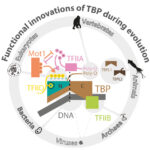
Tracing a transcription initiation factor’s molecular journey across evolutionary timescale

Functional innovations of TBP

M Madan Babu’s group publishes a comprehensive model for the functional innovations of TBP.

More…

Published on 13th May, 2020

Unravelling the replisome: how a molecular machine overcomes obstacles to DNA replication

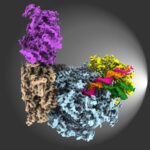
Cryo-EM structure of the Fork Protection Complex (Tof1 in yellow, Csm3 in green) bound to the CMG helicase (blue, brown and grey) in the presence of DNA and an additional factor (Ctf4, purple)

Every time a cell divides, all of its genetic material must be accurately duplicated. This process is controlled by a molecular machine known as the replisome. Joseph Yeeles’ group has now produced the highest resolution, and most complete, structure of a replisome to date.
More…

Published on 4th May, 2020

Ankyrins: a missing molecular link in mechanical senses

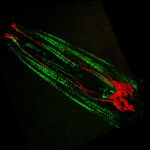
Expression of mechanotransduction ion channels in the touch neurons (red) and muscle cells (green) of a worm

Hearing and touch depend on the ability of sensory neurons to be activated by a force, such as pressure or vibration from sound, and then pass information on to the brain. William Schafer’s group has identified some of the key proteins that make this possible.
More…

Published on 22nd April, 2020

How alcohol-derived DNA damage is fixed

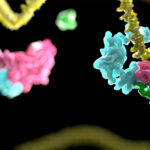
A new repair mechanism for alcohol-derived DNA crosslinks

Alcohol consumption can indirectly cause damage to our DNA and elevate cancer risk. KJ Patel’s group in the LMB’s PNAC Division has identified a novel repair mechanism for DNA damage created by by-products of alcohol metabolism.
More…

Published on 4th March, 2020

How is the Fanconi Anaemia pathway activated to remove DNA lesions?

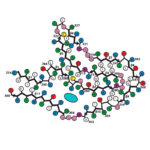
New study, led by Pablo Alcón and Shabih Shakeel in Lori Passmore’s group, in collaboration with KJ Patel in the PNAC Division, uncovers a unique molecular “clamp and pin” mechanism that activates the D2l complex, which then recruits enzymes that cut out damaged DNA
More…

Published on 17th February, 2020

A novel tau fold in the neurodegenerative disease corticobasal degeneration

Schematic representation of CBD tau filament

Corticobasal degeneration (CBD) is a neurodegenerative disease that belongs to a family of diseases called tauopathies in which the protein tau forms abnormal filaments. Sjors Scheres’ and Michel Goedert’s groups have now solved the first structures of CBD tau filaments.

More…

Published on 13th February, 2020
  • «
  • ‹
  • 24
  • 25
  • 26
  • 27
  • 28
  • ›
  • »

Primary Sidebar

News & Events

  • Insight on Research
  • LMB News
  • LMB In The News
  • LMB Alumni News
  • Public Engagement
    • Supporting Education
      • I’m a scientist, get me out of here!
      • London International Youth Science Forum
    • LMB on the Road
      • Cambridge Festival
      • Royal Society Summer Science Exhibitions
      • Big Biology Day
      • LifeLab
    • Events at the LMB
      • Artists in Residence: Home in the Service of Science
      • LMB Open Day 2017
      • STEM in Song
    • Resources
      • Image Game
    • LMB Science Stories
      • Electron Cryo-microscopy
      • Tau and Alzheimer’s
    • Past Events
      • MRC Festival of Research
      • Crystal Growing Competition
        • Past Winners
        • MRC Lab Visits
      • The WormWatch Lab
    • Contact Us
  • Scientific Seminars
    • LMB Named Lectures
  • LMB Exhibitions
    • Sample holders for electron cryomicroscopy
    • Humira
    • Curios of 60 years of the LMB
  • Scientific Training
  • Information for Journalists
  • Scientific Glossary
  • Photographs
  • LMB 365
  • Newspaper Archive

Search

  • Privacy & Cookies
  • Contact Directory
  • Freedom of Information
  • Site Map
Find Us
©2026 MRC Laboratory of Molecular Biology,
Francis Crick Avenue, Cambridge Biomedical Campus, Cambridge CB2 0QH, UK. 01223 267000

The MRC is part of UK Research and Innovation

Contact Us

This site uses cookies. The LMB may use cookies to analyse how you use our website. We use external analysis systems which may set additional cookies to perform their analysis. These cookies (and any others in use) are detailed in our Privacy and Cookies Policy and are integral to our website. You can delete or disable these cookies in your web browser if you wish, but then our site may not work as it is designed.