
Royal Society Awards & Honours
The Royal Society is a Fellowship of the world’s most eminent scientists and is the oldest scientific academy in continuous existence. Each year the Royal Society recognizes excellence in science and technology through its medals, awards and prize lectures and the election of new Fellows. Fellows are elected through a peer review process. The main criterion for election as a Fellow is scientific excellence. The following LMB scientists have been recognized by the Royal Society through election to the Fellowship and through various medals, awards and prize lectures. All the citations for awards, medals and prize lectures have been copied from the Royal Society website.
Fellows
- Fellows of the Royal Society
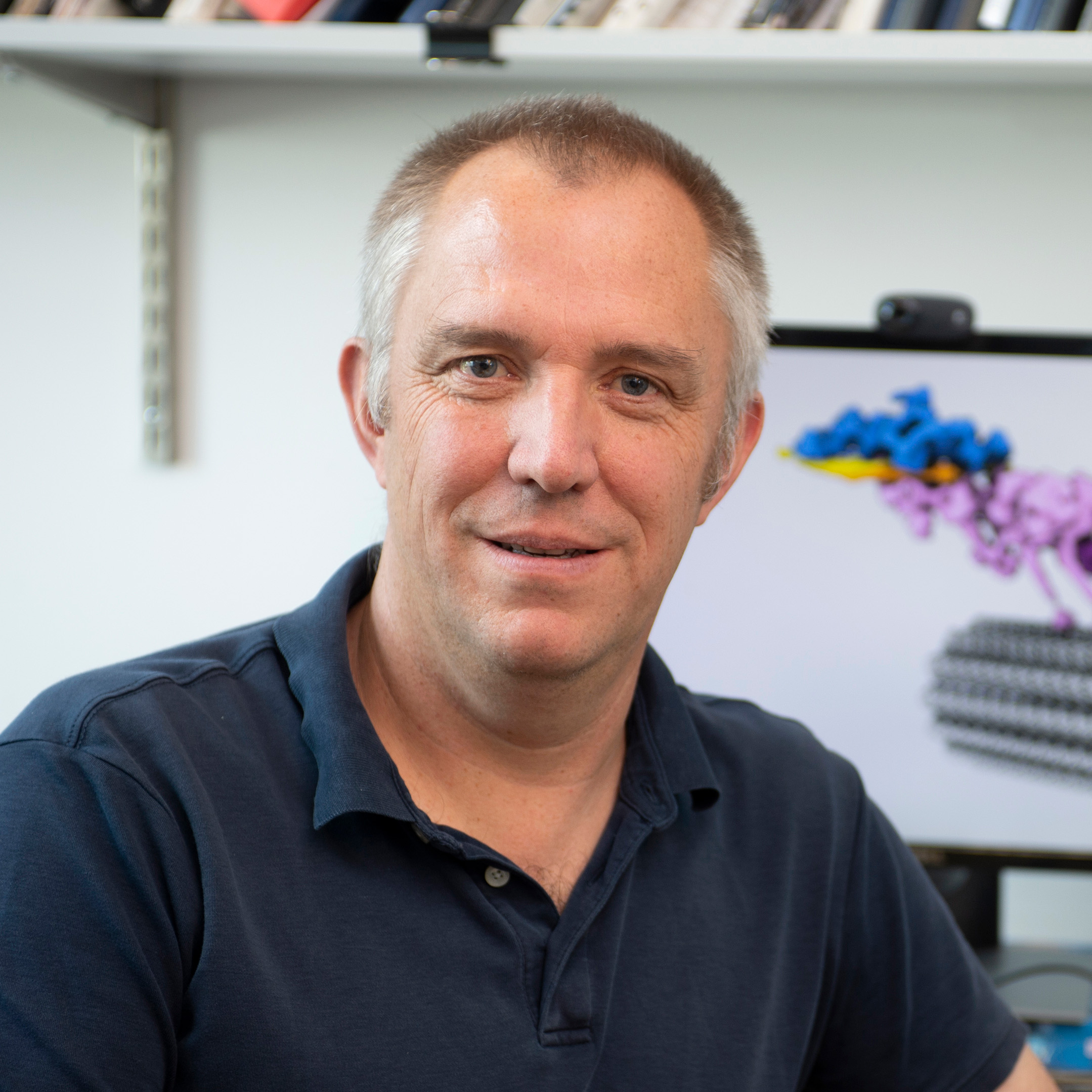 Andrew Carter 2024
 Lori Passmore 2023
 Jason Chin 2022
 Sjors Scheres 2021
 Chris Tate 2021
 William Schafer 2020
 Lalita Ramakrishnan 2018
 Andrew McKenzie 2017
 John Sutherland 2017
 Roger Williams 2017
 Ramanujan Hegde 2016
 KJ Patel 2015
 Sean Munro 2011
 Michael Hastings 2010
 Jan Löwe 2008
 Harvey McMahon 2008
 Brad Amos 2007
 Daniela Rhodes 2007
 David Barford 2006
 Matthew Freeman 2006
 Phil Evans 2005
 Mariann Bienz 2003
 Venki Ramakrishnan 2003
 John Kilmartin 2002
 Andrew Leslie 2001
 Cyrus Chothia 2000
 Michel Goedert 2000
 Kiyoshi Nagai 2000
 John Walker 1995
 Tony Crowther 1993
 Michael Neuberger 1993
 Jonathan Hodgkin 1990
 Greg Winter 1990
 Andrew McLachlan 1989
 Barbara Pearse 1988
 Hugh Pelham 1988
 Terry Rabbitts 1987
 John Sulston 1986
 Mark Bretscher 1985
 Alan Fersht 1983
 Richard Henderson 1983
 Peter Lawrence 1983
 Nigel Unwin 1983
 Uli Arndt 1982
 Dan Brown 1982
 John Finch 1982
 John D Smith 1976
 César Milstein 1975
 David Blow 1972
 Brian Hartley 1971
 Aaron Klug 1969
 Sydney Brenner 1965
 Hugh Huxley 1960
 John Kendrew 1960
 Francis Crick 1959
 Max Perutz 1954
 Fred Sanger 1954
Presidents
- Presidents of the Royal Society
 Venki Ramakrishnan 2015 – 2020
- Aaron Klug
1995 – 2000
Medals
- Copley Medal Winners
- 2024 – Greg Winter for pioneering protein engineering, especially antibody engineering for the successful production of therapeutic antibodies.
- 2020 – Alan Fersht for developing and applying the methods of protein engineering to provide descriptions of protein folding pathways at atomic resolution, revolutionising our understanding of these processes.
- 2016 – Richard Henderson In recognition of his fundamental and revolutionary contributions to the development of electron microscopy of biological materials, enabling their atomic structures to be deduced.
- 2012 – John Walker For his ground-breaking work on bioenergetics, discovering the mechanism of ATP synthesis in the mitochondrion.
- 1997 – Hugh Huxley In recognition of his pioneering work on the structure of muscle and on the molecular mechanisms of muscle contraction, providing solutions to one of the great problems in physiology.
- 1991 – Sydney Brenner In recognition of his many contributions to molecular genetics and developmental biology, and his recent role in the Human Genome mapping project.
- 1989 – César Milstein In recognition of his outstanding contributions to immunology, in particular to the discovery of monoclonal antibodies and to the understanding of the role of somatic mutations in the maturation of the immune response.
- 1985 – Aaron Klug In recognition of his outstanding contributions to our understanding of complex biological structures and the methods used for determining them.
- 1979 – Max Perutz In recognition of his distinguished contributions to molecular biology through his own studies of the structure and biological activity of haemoglobin and his leadership in the development of the subject.
- 1977 – Fred Sanger In recognition of his distinguished work on the chemical structure of proteins and his studies on the sequences of nucleic acids.
- 1975 – Francis Crick In recognition of his elucidation of the structure of DNA and his continuing contribution to molecular biology.
- Royal Medal
 2019 – Michel Goedert For his work on neurodegenerative diseases, especially for identifying and characterising key molecules that form the inclusions of Alzheimer’s and Parkinson’s diseases.
- 2011 – Greg Winter For his pioneering work in protein engineering and therapeutic monoclonal antibodies, and his contributions as an inventor and entrepreneur.
- 2008 – Alan Fersht For his seminal work in protein engineering, which he has developed into a fundamental tool in enzyme analysis and the problem of protein folding.
 1985 – John Gurdon For his outstanding contributions to the techniques of nuclear transplantation and the use of the amphibian egg for investigations on replication, transcription and translation of genes.
- 1982 – César Milstein In recognition of his fundamental contribution to understanding the structure and genetic control of immunoglobulins; his hybridoma technique for producing monoclonal antibodies has revolutionized the potential practical applications of immunology.
- 1977 – Hugh Huxley In recognition of his distinguished research on the structure of muscle and on the molecular mechanisms of contraction.
- 1974 – Sydney Brenner In recognition of his distinguished contributions to molecular biology concerning the nature of the genetic code and its expression during development.
- 1972 – Francis Crick In recognition of his elucidation of the structure of DNA and his continuing contribution to molecular biology.
- 1971 – Max Perutz In recognition of his pioneering work on the molecular biology and structure of proteins.
- 1969 – Fred Sanger In recognition of his pioneering work on the sequence of amino acids in proteins and of nucleotides of ribonucleic acids.
- 1965 – John Kendrew In recognition of his distinguished contributions to the complete structural analysis of a protein molecule (myoglobin), particularly the biological aspects of this study.
- Darwin Medal
- 2014 – John Sutherland In recognition of his novel and convincing work on prebiotic chemistry, in particular his solution to the central problem of nucleoside synthesis.
- 1996 – John Sulston In recognition of his leadership in the study of genome analysis with the potential to have a profound impact on the whole of biology.
 1994 – Peter Lawrence In recognition of his analysis of pattern formation during insect segmentation, and of his contribution to understanding how genetic processes specify spatial information.
- Davy Medal
- 1998 – Alan Fersht In recognition for his pioneering work on the analysis of proteins by combining the methods and ideas of physical-organic chemistry with those of protein engineering thus illuminating such processes as enzymatic catalysis, protein folding, protein-protein interactions and those macromolecule interactions in general that are dominated by the chemistry of the noncovalent bond.
- Gabor Medal
- 1991 – Alan Fersht In recognition of his pioneering work in the use of protein engineering to study protein structure and enzyme function.
Prize Lectures
- Croonian Lecture
- 2007 – Aaron Klug Engineered zinc finger proteins (ZFPs) for the regulation of gene expression.
- 2000 – Nigel Unwin The nicotinic acetylcholine receptor and the structural basis of synaptic transmission.
- 1999 – Hugh Pelham Intracellular membrane traffic: getting proteins sorted.
- 1989 – César Milstein Antibodies, a paradigm of the biology of molecular recognition.
- 1986 – Sydney Brenner The molecular genetics of muscle in the nematode Caenorhabditis elegant.
- 1976 – John Gurdon Egg cytoplasm and gene control in development.
- 1975 – Fred Sanger Nucleotide sequences.
- 1970 – Hugh Huxley The structural basis of muscular contraction.
- 1968 – Max Perutz The haemoglobin molecule.
- 1966 – Francis Crick The genetic code.
- Francis Crick Lecture
 2020 – Marta Zlatic for discovering how neural circuits generate behaviour by developing and disseminating definitive techniques, and by discovering fundamental principles governing circuit development and function.
 2019 – Greg Jefferis In recognition of his discoveries concerning the developmental and functional logic of sensory information processing.
 2016 – Madan Babu Mohan In recognition of Madan’s major and widespread contributions to computational biology.
 2012 – Sarah Teichmann In recognition of Sarah’s exceptional achievements in structural bioinformatics relating to decoding the principles of protein interactions.
- 2009 – Jason Chin Reprogramming the code of life.
- Leeuwenhoek Medal and Lecture
- 2021 – Sjors Scheres For ground-breaking contributions and innovations in image analysis and reconstruction methods in electron cryo-microscopy, enabling the structure determination of complex macromolecules of fundamental biological and medical importance to atomic resolution.
- 2012 – Brad Amos In recognition of Brad’s exceptional impact on the field of cell biology through his co-development of the laser scanning confocal microscope.
- 2006 – Tony Crowther Microscopy goes cold: frozen viruses reveal their structural secrets.
- 1973 – Aaron Klug The structure and assembly of regular viruses.
- Royal Society GlaxoSmithKline Prize and Lecture
- 2003 – Michael Neuberger In recognition of his work on resolving the molecular mechanism of somatic antibody diversification, a key feature of immune response, with consequences reaching far beyond immunology to DNA instability and cancer.
- 1980 – César Milstein In recognition of his pioneering the production of monoclonal antibodies from hybrid cell lines and initiating their application worldwide in many fields of biology and medicine.
- Blackett Memorial Lecture/Jagdish Chandra Bose Memorial Lecture
- 1996 – Aaron Klug Protein designs for the regulation of gene expression.
- Florey Lecture
- 1992 – Hugh Pelham The secretion of protein by cells.
- Medawar Lecture
- 1992 – Max Perutz Species adaptation in a protein molecule.
Awards
- Mullard Award
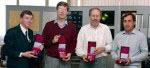 1994 – John White, Brad Amos, Richard Durbin and Michael Fordham In recognition of their development of the MRC-600 series laser-scanning confocal imaging system, an ingenious and innovative means of improving the clarity and definition of microscopes.